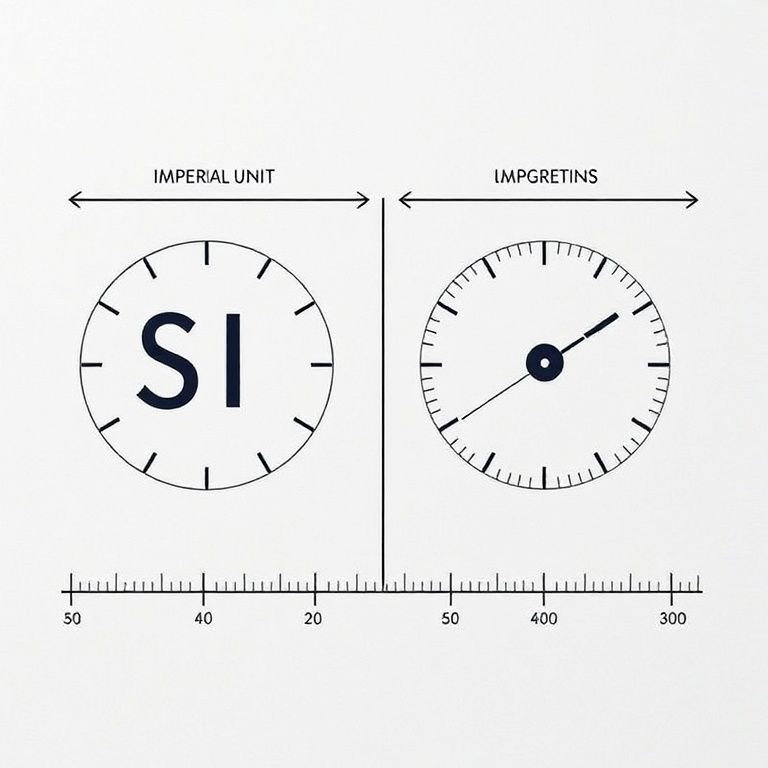
Two Systems, One World
Today, two major systems of measurement are used worldwide: the International System of Units (SI), commonly known as the metric system, and the Imperial/US Customary system. Understanding both is essential for international communication, travel, and trade.
Historical Background
The Imperial System
The Imperial system evolved from various historical measurement systems used in Britain. It was formalized in the British Weights and Measures Act of 1824. The units were often based on human body parts or everyday objects:
- Inch - Width of a man's thumb
- Foot - Length of a human foot
- Yard - Distance from nose to outstretched fingertip
- Mile - 1,000 paces of a Roman soldier
The Metric System (SI)
The metric system was developed during the French Revolution (1790s) to create a rational, universal system based on natural constants. The original meter was defined as one ten-millionth of the distance from the equator to the North Pole.
SI stands for "Système International d'Unités" (International System of Units), established in 1960 by international agreement. It's the modern form of the metric system.
System Comparison
Length
| SI (Metric) | Imperial/US |
|---|---|
| 1 millimeter (mm) | ≈ 0.039 inches |
| 1 centimeter (cm) | ≈ 0.394 inches |
| 1 meter (m) | ≈ 3.281 feet / 1.094 yards |
| 1 kilometer (km) | ≈ 0.621 miles |
Mass/Weight
| SI (Metric) | Imperial/US |
|---|---|
| 1 gram (g) | ≈ 0.035 ounces |
| 1 kilogram (kg) | ≈ 2.205 pounds |
| 1 metric ton (t) | ≈ 2,205 pounds / 1.102 tons |
Advantages of Each System
Metric (SI) Advantages
- Decimal-based - Easy conversions by moving decimal points
- Coherent - Units derived logically from base units
- Universal - Used by scientists worldwide
- Standardized - Precise international definitions
Imperial Advantages
- Human-scale - Often relatable to body measurements
- Divisibility - 12 inches in a foot (divisible by 2, 3, 4, 6)
- Familiar - Traditional in some countries
- Practical - Some units suit specific trades
Global Usage Today
Countries using the metric system: Almost every country in the world, including all of Europe, Asia, Africa, and South America.
Countries using imperial/US customary:
- United States - Primary system for everyday use
- United Kingdom - Mixed (metric official, but imperial common)
- Liberia and Myanmar - Partially
In 1999, NASA's Mars Climate Orbiter was lost because one team used metric units while another used imperial. The $125 million spacecraft was destroyed due to this unit confusion.
Practical Conversion Tips
Quick mental approximations:
- 1 inch ≈ 2.5 cm (exactly 2.54 cm)
- 1 foot ≈ 30 cm
- 1 mile ≈ 1.6 km
- 1 kg ≈ 2.2 pounds
- 1 liter ≈ 1 quart (roughly)
- °F to °C: subtract 32, divide by 2 (approximate)
Summary
While the metric system is the international standard for science and commerce, understanding both systems remains important. Key points:
- SI/Metric is decimal-based and universally standardized
- Imperial has historical roots and some practical advantages
- Conversion errors can have serious consequences
- Most of the world uses metric for official purposes
- Using conversion tools helps avoid errors